Trees & Palms
Fall is a great time to plant trees such as Oaks, Crape Myrtles, Elms, Magnolias and Hollies. The heat isn’t as bad and rain fall is normally good this month for rooting and establishment. Even though top growth may not occur during the fall and winter months, roots will grow and when spring arrives, trees planted in the fall will already have a good head start and grow much faster and produce more flowers at bloom time.
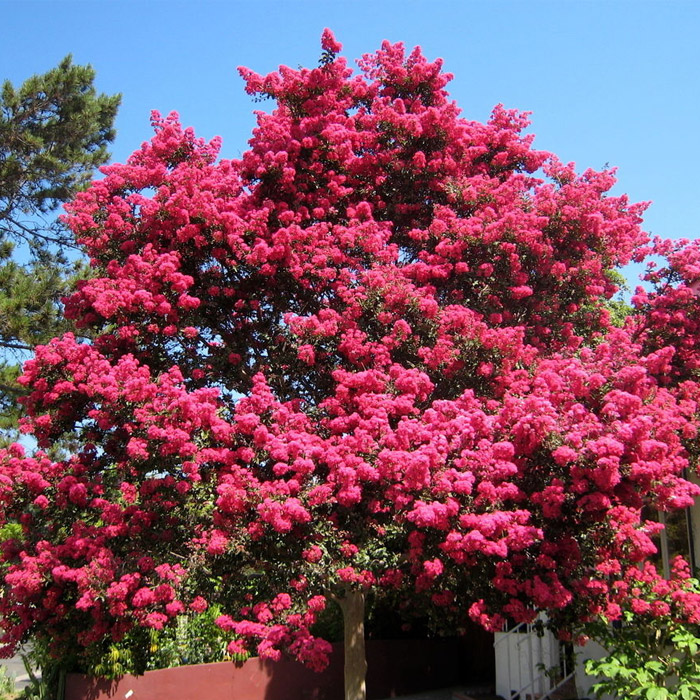
Crape Myrtle – Tuscarora
Keep areas around trees and palms free of grass and weeds. Grass not only competes for moisture and nutrition but trimmers can cause damage.
Trees and palms need to be fertilized in the next month or so. This last fertilization of the year for in ground plants is one of the MOST IMPORTANT to get your plants strong and healthy as they go into the winter season. Plants need about 3 months to take up the fertilizer and harden off before the cold weather arrives. We recommend Nurserymen SureGro 8-2-12 for palms, trees and basic landscape shrubs.
Some trees may be starting to defoliate right now. Trees like sweet gum or bald cypress will be starting to defoliate somewhat due to the time of the year-it is normal.
Citrus & Fruit
Citrus can still be planted in September. There is still plenty of time for roots to get established before the winter cool.

Tangerines
Mature fruit trees should be laden with fruit now. Some fruit trees may be laboring under the burden of the fruit. Remove some fruit if tree is overburdened to prevent damage to the tree. Lemon and limes will be becoming ripe soon and early season oranges like Naval and Hamlin will not be ready until the end of November at the earliest.
Blemishes or sooty mold on fruit will not affect the taste of fruit. Simply wash, peel, and enjoy!
The last fertilizer of the year should be applied now so new growth can harden off before winter. Use Nurserymen Sure Gro 8-4-8.
Vegetables & Herbs
If you have not already done so, now is the time to get your gardens planted for the “cool season”. For in ground gardens, be sure to add soil amendments like compost, peat or manure. If you do not have space for an in-ground bed, consider using containers. Earth Boxes are a wonderful container for vegetables and herbs. Reuse it season after season- just buy fresh soil and the replant kit.
Cool season vegetable plantings include broccoli, cauliflower, onions, Brussels sprouts, collards, spinach, cabbage, lettuce and tomatoes. Be vigilant of pests such as caterpillars, aphids, slugs & snails. Control with Spinosad- a natural product safe for all fruit and vegetables.
Herbs can also be grown throughout the cool season- parsley; rosemary, thyme and oregano are all fairly cold hardy. Basil will need to be protected.
Tomatoes are typically the most popular plant for homeowners to plant. If you are growing tomatoes in a container, make sure the pots are big enough to accommodate the number of plants you put in. Do not overcrowd. Once they are in, make sure that you keep the soil damp. Blossom end rot can develop on tomatoes if the soil moisture is not kept consistent. Calcium cannot be readily absorbed when the soil is too wet or too dry. There are products available to help with this problem that could be used if you consistently get this problem. (E.g. Rot-Stop of Yield Booster)
Note: that Drip or Soaker hoses have 90% efficiency as opposed to overhead watering with sprinklers or hoses. For larger gardens or raised beds, this would be the best watering option.
Want all-Natural Organic options for fertilizing your vegetable? For Nitrogen– Blood Meal or Fish Emulsion; For Phosphorus- Bone Meal; for Potassium– Kelp Powder. Check at the Garden Center for these items. Some guidelines for fertilizing are:
- 1lb 10-10-10 per 100 square feet of 100 feet of row
- 2lbs 5-10-10 or 5-10-5 per 100 square feet of 100 feet of row
- Ammonium Sulfate (about 20-0-0)- apply 2.5 lbs. per 1000 square foot of area of garden
- Blood Meal (about 15-1-1)- apply 3 1/3 lbs. per 1000 square foot area
Look for vegetables and herbs arriving in the Garden Center from about the middle of September to the end.
Here is a great link for more vegetable growing in Florida: https://edis.ifas.ufl.edu/publication/VH021