Foundation ‘Core’ Plants
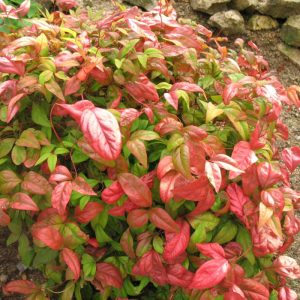
There are many varieties of plants that are cold hardy that can provide the foundation of your landscape. These plants will look good whether it is January or June. Make use of shrubbery with different color foliage, variegated foliage or texture to create interest in your garden. Some suggestions are Viburnum Suspensum, Dwarf Burfordi Holly, Compacta Holly, Schillings Holly, Walters Viburnum , Loropetatlum, Jack Frost Ligustrum, Nandina Domestica, Nandina Firepower, and Indian Hawthorn.
Add in cold hardy palms such as Sabal palms, Sylvesters, Pindos, European fan palms, Chinese Fan Palms and trees to provide height and in some cases, screening. Some flowering plants that are perfectly happy in cool temperatures include Drift roses and Knock Out roses in addition to the Camellias and Azaleas.
New Florida Gardeners
Many new Florida Gardeners miss some of their northern plants and don’t realize things like hostas, lilacs, tulips and peonies will not grow in the south.
Here are some suggestions for substitutions for these:
Lilacs can be substituted with Crape Myrtles which come in a variety of sizes and colors. Although Crape Myrtles are not very fragrant like lilacs. Chaste Tree is another option. It produces lavender blooms that are very attractive to butterflies, bees and hummingbirds. The foliage has sage scented leaves. These trees are small deciduous trees that grow up to about 15’.
Amaryllis and Agapantha can be substituted for Tulips and Daffodils. Amaryllis produces trumpet shaped flowers in shades of pink, red, orange,white and some multicolored. They can be planted between September and January and bloom in the early spring before the leaves develop. Agapantha (often called Lily of the Nile) is a striking summer flower perennial. Flower clusters appear on a single stalk above the leaves, growing about 2-4 feet above the ground. Flowers are seen in shades of blue and white. Tulip or Curcuma Ginger is another beautiful plant. Cone like flowers appear among the foliage. Flowers appear in the spring summer and fall in shades of pink, purple, white, orange or yellow.
Hibiscus can be substituted for Peonies. There are many varieties of hibiscus in many colors. Some have single petal blooms and some double. Available in numerous colors.
Lastly, although there is a southern type Hosta it does not resemble the hostas of the north and the scale they are. A plant that would be larger like northern hostas would be Cast Iron Plant. It has foliage of rich glossy green leaves that reach about 12-20 inches in height and thrives in shade or partial shade. Some varieties have cream or yellow stripes on the foliage as well.
Consider checking out some of these options at the Garden Center in the spring
Deciduous Fruit Trees
Deciduous fruit trees can be planted in February. By the end of February we hopefully will have some deciduous fruit for this part of Florida, such as Florida varieties of peach, nectarine, figs, and blueberries. Now is a good time to spray any deciduous fruit you may have as well.
Here is a spraying guideline for those trees:
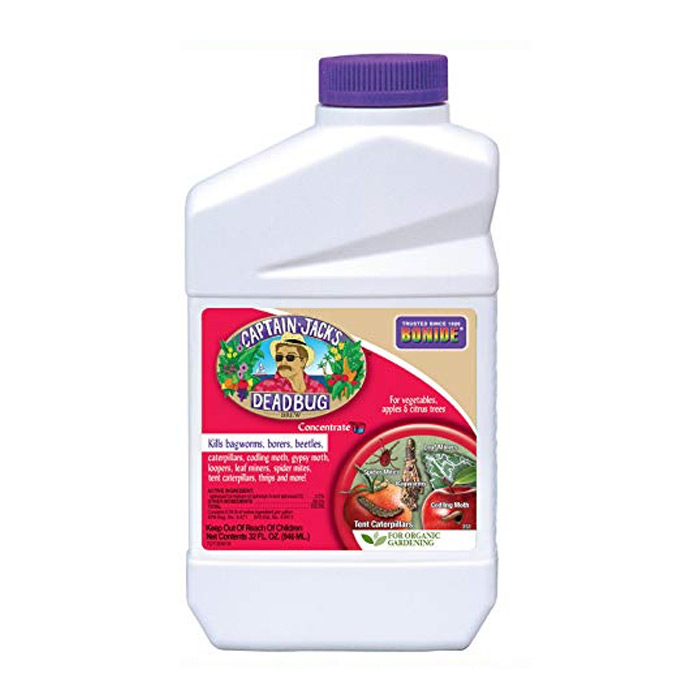
We recommend using Fruit Tree Spray or Spinosad according to the following chart:
• Green Tip Stage: when branch tips show green tissue- spray tree.
• Pre-Bloom: when blossoms are present but NOT open- spray
• Full Bloom: DO NOT APPLY ANY PRODUCTS
• Petal Fall Stage: When last petals have fallen off blossoms-spray
• 1st Cover: 7-10 days after petal fall-spray
• 2nd Cover: Spray as needed to within 14 days of harvest- never spray within those 14 days prior to harvest.